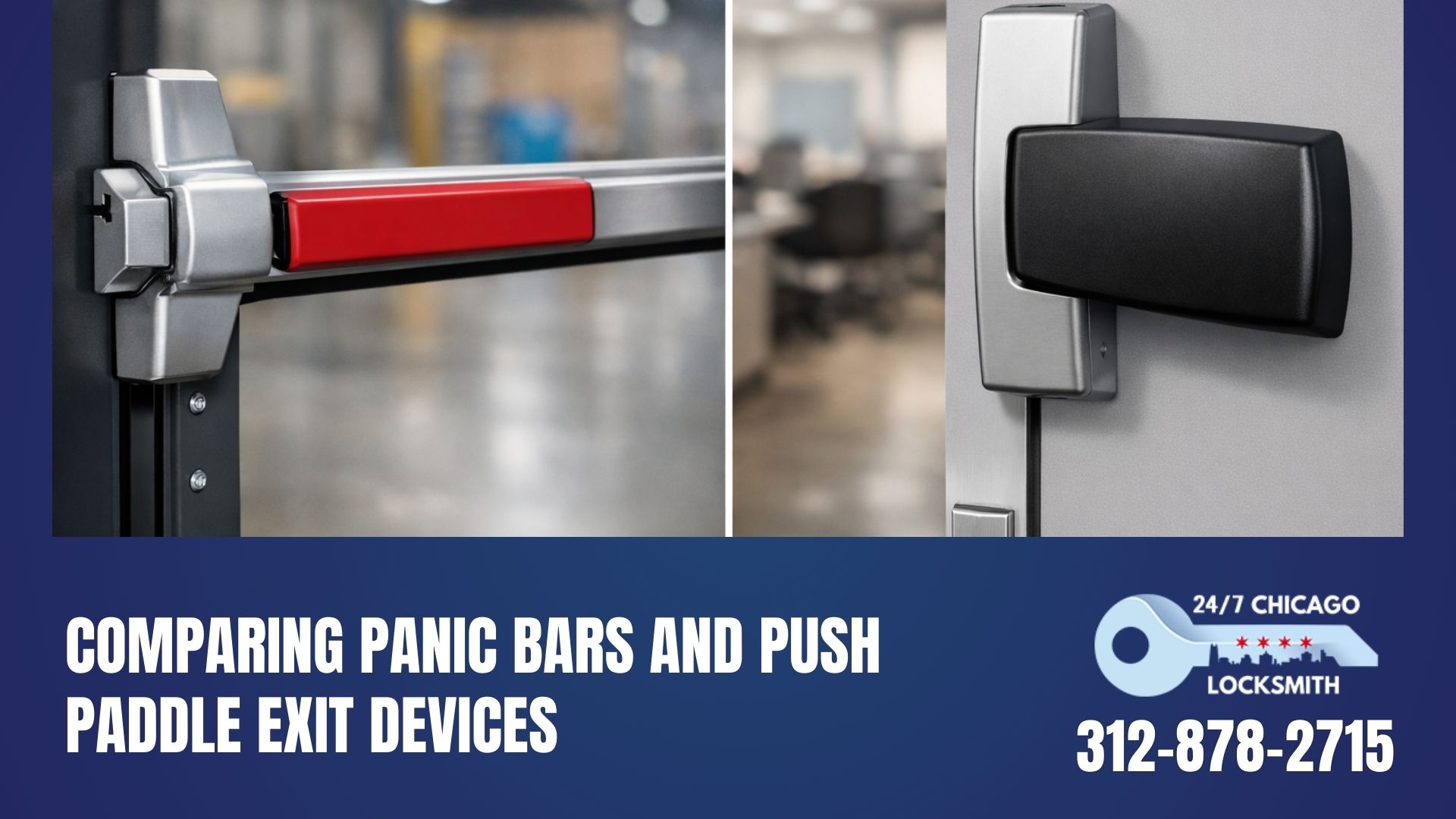
When it comes to commercial building safety in Chicago, choosing the right exit device means way more than just meeting a code requirement. Panic bars and push paddle exit devices both play a critical role in emergency egress, security, and daily usability. Business owners, property managers, and facility operators often struggle to understand which option best fits their space, since each device has unique advantages depending on traffic flow, building use, and safety regulations. In this blog entry, our professional Chicago door hardware installation team will detail the main differences between panic bars and push paddle exit devices.
Panic Bars – What are they used for?
Panic bars, also known as crash bars, are designed for quick exits during emergencies. They are commonly required in high occupancy buildings such as schools, hospitals, and theaters. These devices run along the width of the door and activate when pressure is applied anywhere along the bar. Their simple design reduces hesitation and confusion during high stress situations that require rapid exit. Panic bars are often mandated by fire and building codes. Proper installation helps to ensure:
- Code Compliance – Panic bars are frequently required for buildings with large occupancy loads under Chicago fire and safety codes.
- Ease of Use – The full width bar allows occupants to exit quickly without precise hand placement.
- Emergency Readiness – Designed to release instantly under pressure, making them ideal for crowd situations.
- Durability – Heavy duty construction withstands frequent use in busy commercial environments.
How Push Paddle Exit Devices Differ
Push paddle exit devices offer a more compact and streamlined alternative. Instead of a full length bar, these devices use a paddle shaped lever that has to be pressed to unlock the door. They are commonly used in offices, retail spaces, and lower occupancy buildings. Push paddles provide controlled access while still allowing for safe and fast exits. Their design blends well with modern interiors. A locksmith can help determine if they meet local code requirements for your space. Paddle bars provide the benefits of:
- Space Efficiency – Compact design works well for narrow doors or modern layouts.
- Controlled Access – Offers more deliberate operation while still maintaining safety.
- Aesthetic Appeal – Cleaner appearance suits professional office environments.
- Custom Configuration – Can be paired with access control systems for added security.
Choosing the Right Exit Device for Your Chicago Property
The decision between panic bars and push paddle devices depends on several factors. Occupancy level, building type, and local regulations should all play a role in your choice. High traffic public buildings usually benefit from panic bars, while smaller commercial spaces may prefer push paddles. Security needs and regular use patterns should also be considered. By working with our licensed Chicago locksmith team, you can ensure you receive the best level of guidance and installation skill to help you avoid costly code violations. Our Chicago exit device installation team provides:
- Occupancy Assessment – Higher occupancy typically requires panic bars for compliance.
- Building Function – Public venues prioritize speed, while offices balance security and access.
- Code Review – Local regulations determine which devices are permitted.
• Professional Installation – Correct setup ensures reliable performance and safety.
