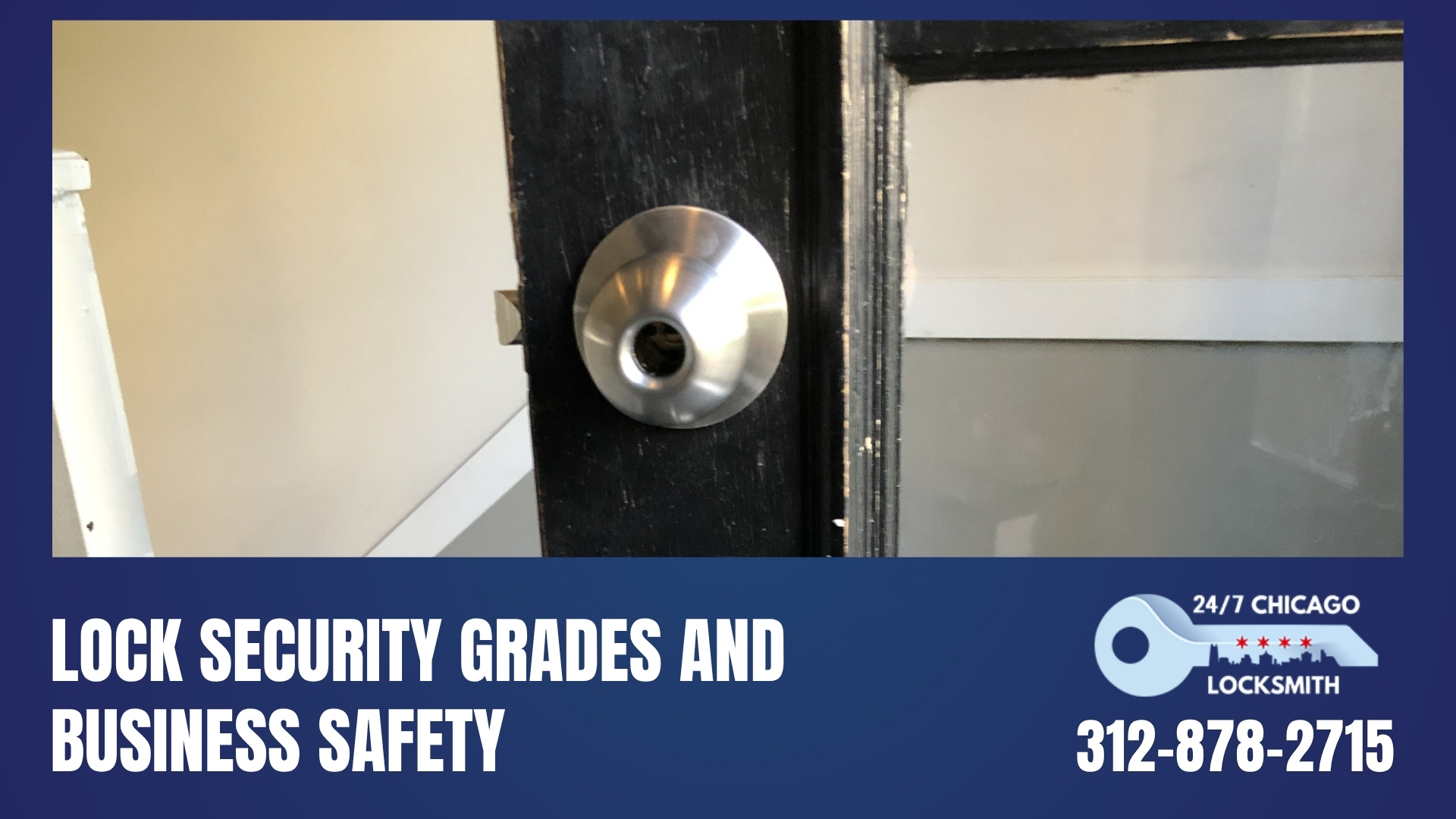
Not all commercial locks are built the same. Some are designed for light residential use. Others are built to withstand years of heavy traffic, forced entry attempts, and constant daily wear. Business owners often overlook lock grades, but they matter a lot! Choosing the right commercial lock can improve security, reduce maintenance issues, and help protect employees and inventory. At Chicago Locksmith, we provide commercial locksmith services throughout the broader Chicago area, to locations everywhere from River North to Naperville and much more!
Understanding ANSI Lock Grades
Commercial locks are graded using standards developed by ANSI, the American National Standards Institute, along with the Builders Hardware Manufacturers Association. These grades measure durability, strength, and resistance to forced entry. Grade 1 locks are the highest commercial rating available. Grade 2 locks offer moderate commercial protection. Grade 3 locks are generally intended for residential use.
Grade 1 locks go through much tougher testing. They are built to survive heavy daily traffic and more aggressive physical force. That makes them ideal for retail stores, office buildings, warehouses, schools, and healthcare facilities. Grade 2 locks may work well for smaller offices or lower-risk interior doors. Grade 3 locks are usually not strong enough for major business entrances.
According to the Builders Hardware Manufacturers Association, Grade 1 locks must survive significantly more operational cycles than lower-rated locks during testing. That extra durability often translates into fewer failures and lower long-term replacement costs.
- Grade 1 Locks – Highest commercial security rating with maximum durability.
- Grade 2 Locks – Moderate protection for lighter commercial applications.
- Grade 3 Locks – Primarily designed for residential or low-traffic use.
- Durability Testing – ANSI standards measure long-term performance under stress.
- Forced Entry Resistance – Higher grades provide stronger protection against break-ins.
- Lower Maintenance Costs – Better locks often last longer under heavy use.
Why Businesses Need Commercial-Grade Locks
Commercial buildings deal with different security threats than homes. Businesses often contain expensive equipment, inventory, sensitive records, or customer information. Employee traffic is also much heavier throughout the day. Weak locks wear out fast under those conditions.
Retail stores, restaurants, offices, and warehouses all benefit from stronger lock hardware. A cheap lock on a commercial front door becomes a major vulnerability. Criminals often target weak entry points first. Strong locks help create a more difficult barrier for forced entry attempts.
The FBI reports that many commercial burglaries involve forced entry through doors or windows. Reinforced locks and quality door hardware help reduce those risks significantly. Businesses should also remember that locks are only one piece of the puzzle. Door frames, hinges, and strike plates matter too.
- Protect Valuable Inventory – Stronger locks help secure expensive business assets.
- Handle Heavy Traffic – Commercial locks are designed for frequent daily use.
- Reduce Break-In Risks – Better hardware improves forced entry resistance.
- Support Insurance Requirements – Some commercial policies require upgraded locks.
- Improve Employee Safety – Secure entrances help create safer workplaces.
- Strengthen Overall Security – Locks work best alongside reinforced hardware systems.
Extra Security Features Businesses Should Consider
Strong locks are important, but complete commercial security goes further than that. Reinforced strike plates, restricted key systems, and access control technology all improve protection. Many businesses are now combining traditional locks with electronic access systems for better monitoring and control.
Restricted keyways are especially useful for businesses. These systems limit unauthorized key duplication and help management maintain tighter control over access. Electronic systems can also track who enters certain areas and when. That adds another layer of accountability.
Security cameras and alarm systems work best when paired with strong physical security hardware. Layered protection is the goal. The more obstacles criminals face, the harder it becomes to gain access quickly.
- Reinforced Strike Plates – Stronger mounting points improve door resistance.
- Restricted Keyways – Specialized keys reduce unauthorized copying.
- Electronic Access Systems – Businesses gain better control over building access.
- Commercial Door Closers – Controlled closing helps maintain secure entry points.
- Security Cameras – Surveillance supports broader business security planning.
- Layered Protection – Multiple security measures create stronger defense overall.
Choosing the Right Commercial Locksmith
Commercial locksmith work requires experience. Businesses need locksmiths who understand commercial hardware, building codes, and long-term security planning. A knowledgeable locksmith can recommend lock systems that actually fit the needs of the property instead of overselling unnecessary upgrades.
Routine maintenance matters too. Commercial locks experience constant wear. Hinges loosen. Cylinders wear down. Doors shift over time. Preventative maintenance helps businesses avoid surprise lock failures and expensive emergency service calls.
Businesses with multiple locations may also benefit from master key systems or integrated access management solutions. Organized security planning saves time and improves daily operations.
At Chicago Locksmith, we provide commercial locksmith services throughout the broader Chicago area, to locations everywhere from downtown Chicago to Arlington Heights and from Aurora to Evanston. Properly graded locks and professional locksmith planning help businesses improve security, reduce liability concerns, and protect employees and customers alike!
- Commercial Expertise – Experienced locksmiths understand business security challenges.
- Preventative Maintenance – Regular inspections help prevent lock failures.
- Code Compliance – Professional installation supports local safety standards.
- Master Key Systems – Organized access improves operational efficiency.
- Customized Security Planning – Every business has different protection needs.
- Long-Term Support – Reliable locksmith partnerships improve security over time.
