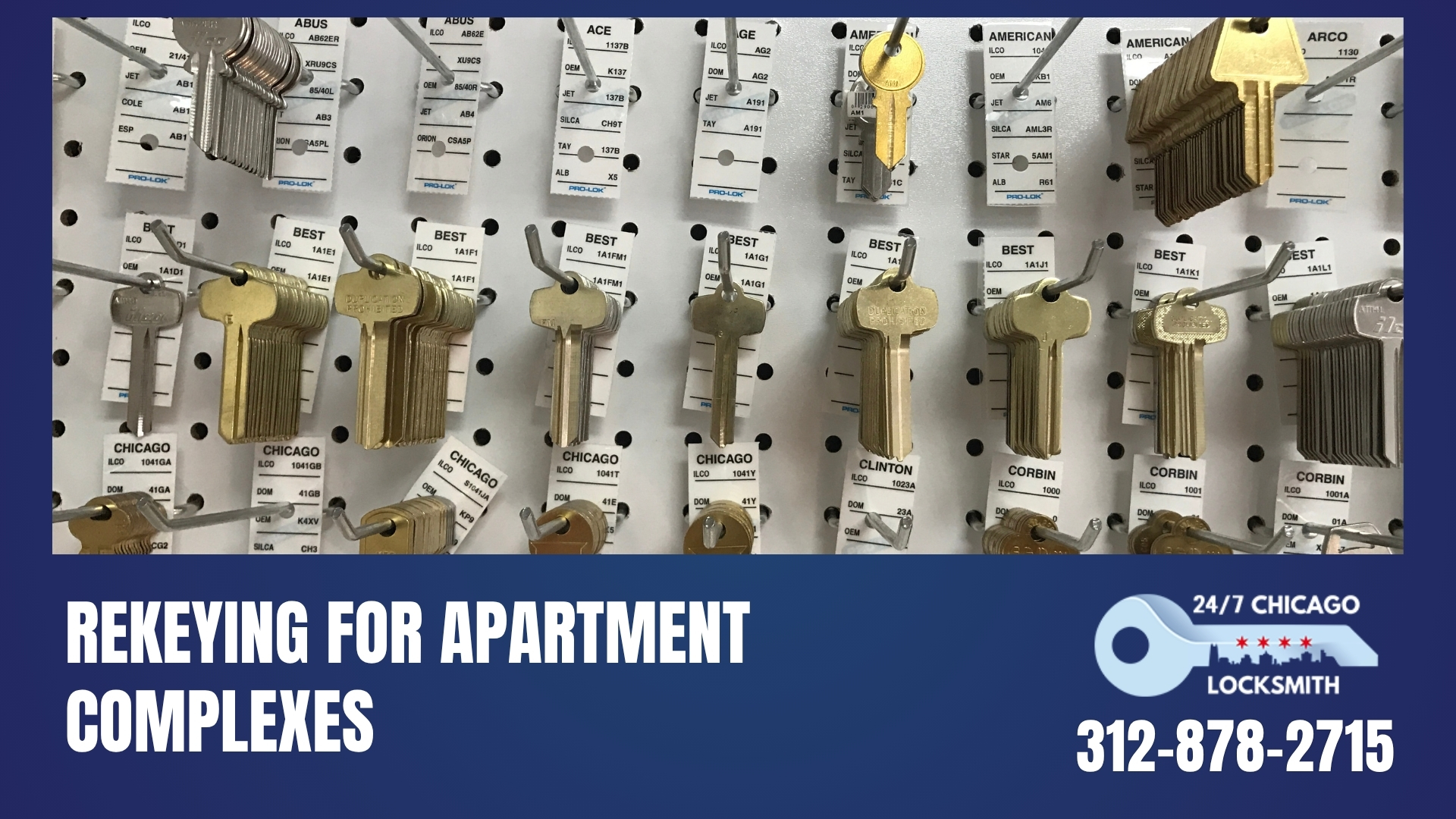
Apartment security is a constant challenge for property managers. Tenants move in and out fast. Keys get lost. Maintenance crews change. Former residents sometimes forget to return copies. That is where rekeying becomes a huge advantage! Rekeying helps apartment complexes improve security without replacing every lock from scratch. At Chicago Locksmith, we provide locksmith services throughout the broader Chicago area, to locations everywhere from Lincoln Park to Hyde Park and from Evanston to Cicero.
What Rekeying Actually Does
Rekeying changes the inside of a lock so old keys stop working. The lock hardware itself stays in place, but the internal pins are adjusted to fit a brand-new key. It is faster and usually far more affordable than full lock replacement. For apartment complexes, that matters. Large buildings may have dozens or even hundreds of units that need security updates every year.
Property managers often rekey after tenant turnover, lost keys, or staff changes. It is one of the simplest ways to tighten building security quickly. It also helps maintain a consistent look throughout the property since existing lock hardware can stay installed. Clean, organized, and practical!
According to the National Crime Prevention Council, strong access control measures help reduce unauthorized entry risks in multifamily housing properties. Rekeying is a major part of that process.
- Tenant Turnover Protection – Rekeying prevents previous tenants from accessing old units with copied keys.
- Lower Overall Costs – Rekeying is usually much cheaper than replacing every lock completely.
- Faster Service – Most apartment locks can be rekeyed quickly with minimal disruption.
- Keeps Existing Hardware – Property managers can maintain matching lock styles throughout the complex.
- Better Key Control – New keys make it easier to track authorized access.
- Flexible Security Updates – Rekeying works for apartments, offices, storage rooms, and common areas.
Why Master Key Systems Matter
Many apartment complexes combine rekeying with master key systems. These systems allow authorized staff to access multiple units using one key while tenants still have their own unique apartment keys. That makes maintenance work much easier. Emergency access becomes faster too.
A good master key system improves organization across the entire property. Maintenance teams do not need giant key rings loaded with random keys anymore. Property managers can also assign different access levels depending on staff responsibilities. Smart planning makes a big difference here.
However, master key systems need proper management. Lost master keys can create serious security problems if they are not handled quickly. That is why many complexes use restricted key systems that prevent unauthorized key duplication.
- Simplified Maintenance Access – Staff can reach authorized units more efficiently.
- Faster Emergency Entry – Emergency situations can be handled more quickly when needed.
- Reduced Key Clutter – Fewer physical keys improve organization for management teams.
- Restricted Key Duplication – Specialized keys reduce unauthorized copying risks.
- Scalable Systems – Master key systems can expand with growing properties.
- Better Access Management – Different staff members can receive different permission levels.
When Apartment Complexes Should Rekey
Some property managers wait too long before updating locks. That creates unnecessary risk. Rekeying should happen after every tenant move-out, especially when keys are missing. Lost keys are another major reason to rekey immediately. Even one unreturned key can become a future problem.
Ownership changes are another smart time to rekey an apartment complex. Older buildings sometimes have years of undocumented key copies floating around. Rekeying helps reset the entire security system. It creates a fresh starting point for new management teams.
Routine lock evaluations are important too. Locks wear down over time from heavy daily use. Sticking cylinders, loose hardware, and worn pins can all affect security and reliability. Regular inspections help catch issues early before they become expensive headaches.
- After Tenant Move-Outs – Old tenant keys should never continue working after occupancy changes.
- Following Lost Keys – Missing keys increase the risk of unauthorized access.
- Vendor Access Changes – Contractors and vendors may no longer need building access.
- Ownership Transitions – New management often benefits from fresh security control.
- After Break-Ins – Security incidents should trigger immediate lock evaluations.
- Preventative Maintenance – Regular lock inspections help avoid future failures.
Choosing the Right Locksmith for Apartment Properties
Apartment complexes need more than basic residential locksmith work. Large multifamily properties involve organized key systems, commercial-grade hardware, and long-term security planning. Experience matters here. A locksmith who understands apartment operations can help property managers avoid expensive mistakes.
Documentation is also critical. Good locksmith companies keep accurate records for key systems and lock assignments. That improves long-term organization and helps management teams stay in control of building access. Some complexes may also benefit from upgraded security options like restricted keyways or electronic access systems.
At Chicago Locksmith, we provide commercial and residential locksmith services throughout the broader Chicago area, to locations everywhere from Wicker Park to Oak Park and from Schaumburg to the South Loop. Strong rekeying plans help apartment complexes improve tenant safety, reduce liability concerns, and simplify property management operations!
- Multifamily Experience Matters – Apartment complexes require specialized locksmith planning.
- Organized Documentation – Accurate records improve long-term security management.
- Scalable Security Systems – Buildings need systems that can grow over time.
- Hardware Evaluations – Professional inspections help identify worn or outdated locks.
- Access Control Upgrades – Electronic systems may improve large property security.
- Tenant Confidence – Better security helps residents feel safer in their homes.
